



Clinical AI reliability · Causal reasoning · Computational medicine

Habib Latifizadeh, Ph.D.

When should evidence from a clinical AI system change a decision, and when should uncertainty, patient heterogeneity, or repeated model failure limit its use?

I examine that question through biostatistics, causal inference, and mechanistic modeling across medical images, electronic health records, physiological data, and biological systems. The emphasis is patient-level evidence: where errors concentrate, how uncertainty should be represented, and whether a model supports the decision being considered.

Laboratory for Computational Physiology Project Co-Investigator & Visiting Scholar · 2026–2027
Lead Data Scientist & Biostatistician · Epilepsy Surgery Outcomes · 2026–2027
Postdoctoral Associate · Department of Biostatistics & Bioinformatics · 2024–Present
NSF NRT Research Fellowship · Digital Health in AI & Machine Learning · 2023–2024
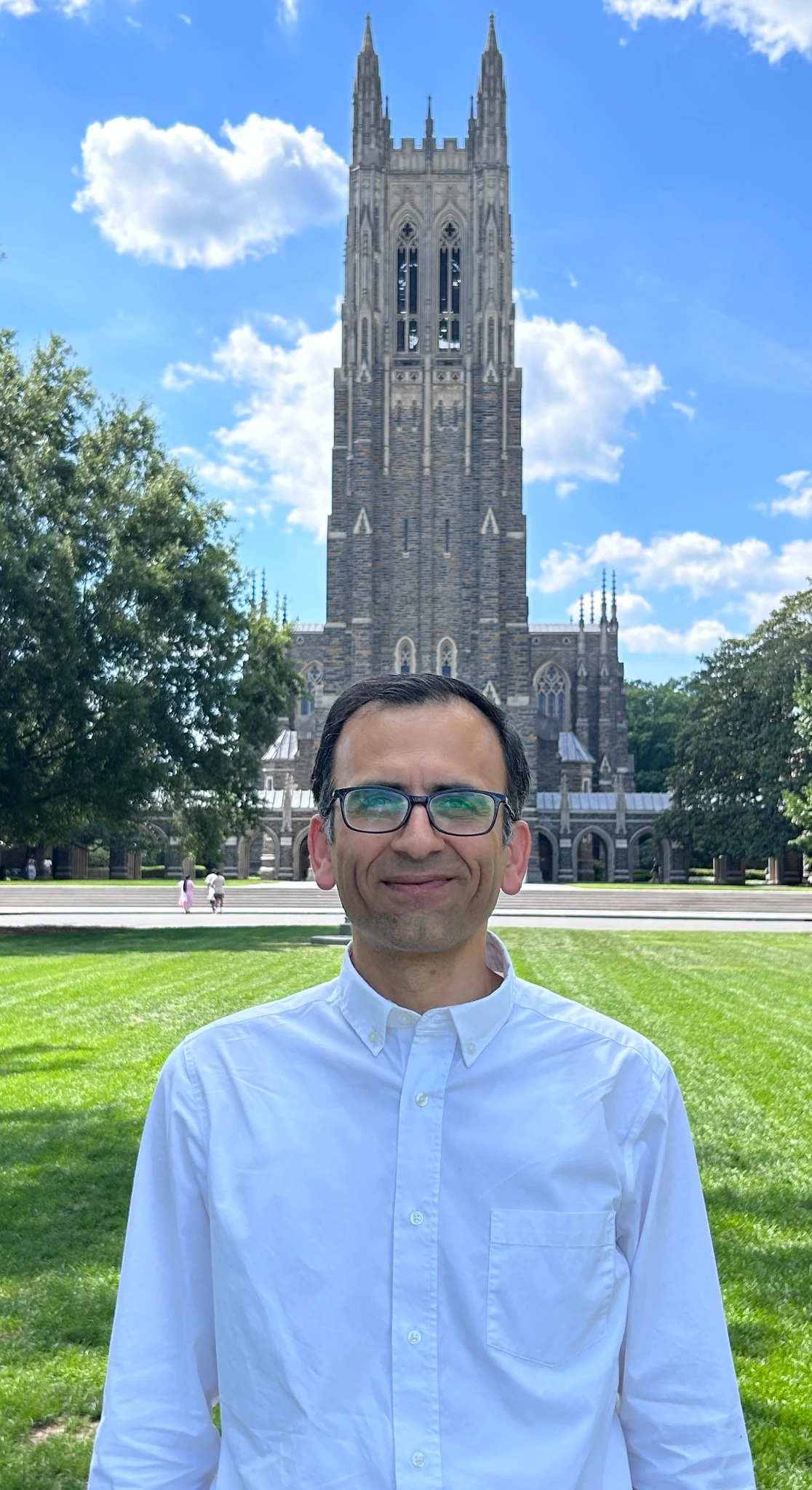
Portrait of Habib Latifizadeh
Duke Chapel, East Campus

Selected research projects

Four projects examine a common problem: how to make model-based claims that remain proportionate to the evidence.

Each project page states the question, the available evidence, my contribution, and the limits on interpretation.

01 · MIT Critical DataOngoing

Reliability and Failure Analysis for Multimodal Clinical AI

I am evaluating whether model failures concentrate in the same patients or encounters across structured clinical data and chest radiographs. The analysis centers on temporal linkage, calibration, sensitivity analysis, uncertainty, and subgroup stability.

02 · Duke EpilepsyUpdated analysis

Surgical Decision Support for Epilepsy Outcomes

I led a retrospective analysis of the 5-SENSE focality score in 110 treated patients. The continuous score was associated with seizure freedom, whereas the transferred threshold retained high sensitivity but low specificity.

BiostatisticsEpilepsy surgeryModel evaluation
View project →
03 · Duke Postdoctoral ResearchOngoing

Mechanistic and Multiscale Modeling for CMV and Immune Translation

I develop simulation and alignment methods for two related translation problems: maternal-placental-fetal CMV modeling and human-NHP immune-cell mapping under measurement and biological uncertainty.

Multiscale modelingUncertaintyOptimal transport
View project →
04 · Ph.D.Published foundation

Causal Network Inference in Tumor Microenvironments

I co-developed a method for inferring heterocellular networks from observational tumor data and used it to examine how oncogenic CCN4 expression is associated with changes in tumor, immune, and stromal relationships.

Causal inferenceBayesian networksComputational oncology
View project →
Methodological coreCausal reasoningCalibrated uncertaintyMechanistic structureReproducible computation

Selected publications

Peer-reviewed work, open methods, and clearly labeled work in progress.

All publications →
2026In progress

Preoperative Focality Scoring for Predicting Seizure Freedom After Temporal-Lobe Epilepsy Surgery

H. Latifizadeh et al.

Statistical lead for a Duke analysis of the 5-SENSE focality score and postoperative seizure freedom.

Academic trajectory

From numerical analysis to patient-level clinical AI evaluation.

My research trajectory extends from nonlinear systems and numerical methods to causal network inference, computational biology, biostatistics, and patient-level model evaluation.

Research experience
  1. MIT Laboratory for Computational PhysiologyProject Co-Investigator & Visiting Scholar
  2. Duke Comprehensive Epilepsy CenterLead Data Scientist & Biostatistician
  3. Duke Biostatistics & BioinformaticsPostdoctoral Associate
  4. NSF Bridges to Digital HealthResearch Fellow in AI & Machine Learning
  5. WVU Cancer InstituteMachine Learning Researcher

Editorial leadership

Editorial service informed by statistical and clinical review.

I serve on editorial or advisory boards for npj Digital Medicine, iScience, and the International Journal of Modeling, Simulation, and Scientific Computing, and I have reviewed more than 50 manuscripts.

Scholarly service →

Collaboration & contact

Research conversations grounded in a specific scientific question.

I welcome inquiries concerning clinical AI evaluation, biostatistics, causal inference, computational biology, and mechanism-informed modeling.

Get in touch